Learn PLC Programming & Automation: Introduction to Industrial Control Systems
What you will learn
Note➛ Make sure your 𝐔𝐝𝐞𝐦𝐲 cart has only this course you're going to enroll it now, Remove all other courses from the 𝐔𝐝𝐞𝐦𝐲 cart before Enrolling!
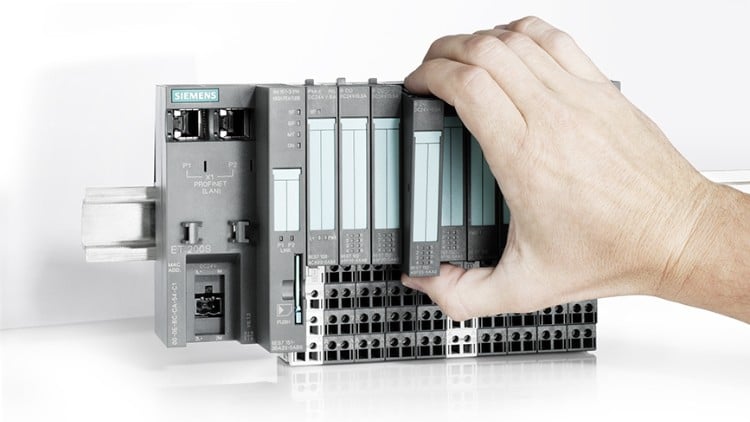
Understand PLC hardware, architecture, and communication for industrial automation with real-world applications and case studies.
Develop ladder logic programming skills to design and troubleshoot automated control systems using industry-standard software tools.
Work with input/output modules, timers, counters, and logic operations to build and test functional PLC-based automation processes.
Apply fundamental troubleshooting techniques to diagnose and resolve common PLC issues in industrial and manufacturing settings.
Add-On Information:
- Advanced Control Algorithms: Implement sophisticated control strategies like PID loops for precise regulation of continuous processes (temperature, pressure, flow), optimizing system response and stability.
- Industrial Networking & Communication: Explore essential industrial protocols (e.g., Ethernet/IP, Profinet, Modbus) to integrate PLCs with HMIs, VFDs, and SCADA systems, creating cohesive, networked automation solutions.
- Structured Programming Techniques: Master structured programming using function blocks, SFC, and structured text (ST) for developing modular, readable, and maintainable PLC projects in complex industrial applications.
- Analog Signal Processing & HMI Integration: Learn to configure and process analog input/output signals and design intuitive Human Machine Interfaces (HMIs) for effective operator interaction, monitoring, and control.
- Industrial Safety & Best Practices: Apply critical industrial safety principles in PLC programming, focusing on emergency stop circuits, interlocks, and safety integrity levels (SIL) to ensure compliant and secure automated operations.
- Advanced Data Handling & Optimization: Develop robust strategies for data manipulation including arrays and registers, vital for tasks like recipe management, data logging, and optimizing operational efficiency within PLC programs.
- PROS:
- High Demand & Career Opportunities: PLC skills are highly sought after in manufacturing and automation, leading to excellent career prospects as automation engineers or control technicians.
- Hands-on Practical Skills: Equips you with directly transferable skills to design, program, and maintain real-world industrial control systems, providing a strong foundation for advanced automation.
- CONS:
- Requires Logical Thinking: The depth of technical detail and logical problem-solving required can be challenging for those without prior engineering or programming exposure.
English
language