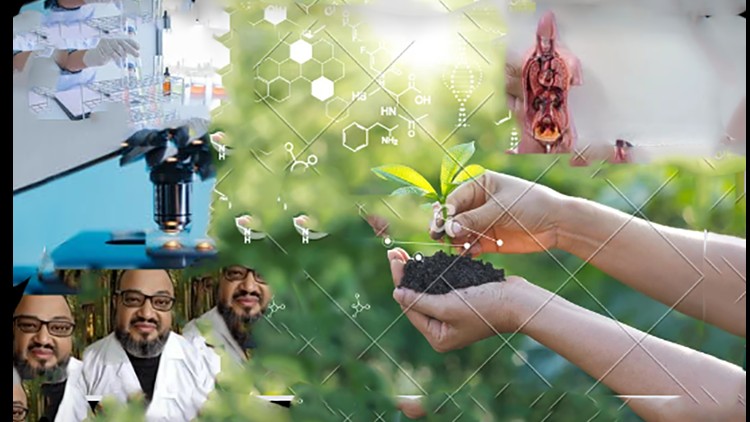
Biology principals
Why take this course?
🌱 Introductory Biology for Medical Professionals: A Comprehensive Guide to Life’s Building Blocks
🚀 Course Overview:
Dive into the fascinating world of biology, tailored specifically for medical professionals. This course will equip you with a solid foundation in biology, focusing on the principles and mechanisms that underpin all living organisms, including humans. From the atomic level to cellular processes, and from metabolism to reproduction, understand how biological concepts apply directly to human health and medicine.
🔋 Module 1: The Essence of Biology
- What is Life? Discover the fundamental questions that define life and explore the discoveries that shape our understanding of living organisms.
- Organizing Science: Learn how biologists categorize their findings into a framework that stands the test of time, ensuring a coherent body of knowledge.
🧪 Module 2: The Chemical Foundations
Biology and chemistry are intertwined; grasp the basics of chemistry essential for understanding biological processes.
- Atomic Basics: Explore the atomic structure as the foundation of all biological molecules.
- Organic Molecules: Delve into the world of carbohydrates, proteins, lipids, and nucleic acids that are critical to life.
🪞♀️ Module 3: Cells and Their Membranes
- Cell Theory: Uncover the principles of cellular biology and how cells form the building blocks of life across all organisms.
- Cell Diversity: Distinguish between plant, animal, fungus, and bacterial cells and understand the significance of their structural differences.
📊 Module 4: Classification in Biology
- Taxonomy Explained: Master the art of classifying organisms based on shared characteristics to unravel the intricate web of life’s evolutionary history.
⚛️ Module 5: Metabolism, Enzymes, and Cellular Respiration
- Metabolic Insights: Uncover the complex world of metabolism and how enzymes facilitate essential biological reactions.
🌱 Module 6: Photosynthesis – The Engine of Life
- Plant Growth: Discover how plants harness sunlight to produce energy, a process that is the bedrock of Earth’s ecosystems.
🔬 Module 7: Cellular Reproduction
- Mitosis: Understand the mechanism of cell division for growth, repair, and development in all living organisms.
- Meiosis: Explore the specialized process of reproduction that generates genetic diversity within a species, leading to the unique traits in every individual.
This course is designed to provide medical professionals with an enriched understanding of biology, enhancing their knowledge and skills in healthcare. Through engaging content, interactive activities, and real-world applications, you’ll gain valuable insights into the biological systems that maintain human health and the principles behind disease, treatment, and diagnosis.
Join us on this journey through the wonders of biology, where every discovery brings us closer to understanding the fundamental laws of life. 📚⚗️✨
Enroll now and embark on a transformative learning experience that will elevate your expertise in the medical field! 🚀🏫
Caption: Biology principals | Topics: the basic characteristics of life Introduction to Molecular and Cellular Biology
the levels of organization of life and characteristics of each level Biological Molecules
Metabolism is the chemistry of life.
Cells and Cell Membranes
Metabolism, Enzymes, and Cellular Respiration
Photosynthesis
Cellular Reproduction: Mitosis
Cellular Reproduction: Meiosis
Mendelian Genetics and Chromosomes
Gene Expression
Overview
Alright, let’s talk ‘Introductory Biology: Cellular Molecular Basis of Life.’ From my vantage point in the tech world, dabbling in everything from software architecture to data analytics, it might seem odd to jump into cell biology. But honestly, if you’re like me – constantly looking for the next frontier where technology intersects with something truly impactful – then understanding life at its most fundamental level is crucial. This isn’t your high school biology class with frog dissections; this is a deep, rigorous dive into the actual code and machinery of life. It’s about understanding the “why” and “how” behind every living process, from the elegant dance of DNA replication to the intricate energy production within a cell. What struck me most was how beautifully it demystifies concepts often oversimplified, providing the intellectual scaffolding for a truly **beginner to advanced** comprehension of biological systems. It connects dots you didn’t even know existed, showing how seemingly disparate topics like cellular respiration and Mendelian genetics are all interwoven into the grand tapestry of life’s operating system. It’s an essential bedrock, especially if you foresee any engagement with biotech, bioinformatics, or even just want a better grasp of the scientific discussions shaping our future.
Prerequisites
Honestly, you don’t need to be a biology wizard to jump into this. A solid high school science background – especially biology and chemistry – will certainly give you a head start, helping you navigate the terminology and basic concepts without feeling completely adrift. Beyond that, what’s really important is a healthy dose of curiosity and a willingness to engage with complex, abstract ideas. The course delves into intricate molecular pathways and genetic principles, so strong analytical and logical reasoning skills are far more valuable than memorizing every single enzyme. There’s no heavy-duty math involved, but thinking in systems and understanding causal relationships is paramount. If you’re coming from a purely tech background, be prepared to shift gears from discrete logic to probabilistic biological systems, which is a fantastic mental exercise in itself.
Skills & Tools
While this introductory course doesn’t necessarily hand you **industry-standard tools** like a bioinformatician’s suite of Python libraries or a biochemist’s spectrophotometer, it equips you with something far more fundamental: the conceptual framework to *understand* what those tools are actually measuring or analyzing. You’ll develop a robust understanding of key biological processes, enabling you to interpret scientific literature, analyze experimental data, and conceptualize complex systems. This includes:
- Profound understanding of molecular interactions and their biological consequences.
- Analytical skills to trace metabolic pathways and genetic inheritance patterns.
- Ability to synthesize information across different biological scales (molecular to cellular).
- Foundational knowledge crucial for eventually utilizing **industry-standard tools** for genetic sequencing, protein analysis, and drug discovery platforms.
Think of it as learning the operating system architecture before you start coding applications. It’s about acquiring the **job-ready skills** in foundational biological literacy that modern interdisciplinary roles demand.
Career Benefits & Job Roles
For a tech professional, this course is an incredible asset for **career growth** and opening doors to fascinating new sectors. It provides the essential biological literacy required to thrive in emerging fields at the intersection of tech and life sciences.
- Biotech & Pharma: Understand the mechanisms behind drug development, genetic therapies, and diagnostics. Foundational for roles in R&D, clinical trials, or even regulatory affairs.
- Bioinformatics & Computational Biology: Essential for data scientists or software engineers looking to apply their skills to genomic data, proteomics, or systems biology. You’ll speak the language of the domain experts.
- Medical & Health Tech: Gain insight into the human body at a cellular level, crucial for developing wearables, diagnostic tools, or AI-powered healthcare solutions.
- Environmental Science & Agri-Tech: Understand ecological processes, genetic modification, and sustainable practices at their root.
This course isn’t about getting you an immediate “biologist” job, but it’s crucial **certification prep** for specialized master’s programs, advanced certifications, or even just building a strong resume for interdisciplinary roles like a Bio-Data Analyst, Health Informatics Specialist, or R&D Assistant. It shows a commitment to understanding complex scientific domains, a trait highly valued in any forward-thinking organization tackling **real-world projects** at the bleeding edge.
Pros
- Comprehensive Foundation: It delivers an incredibly thorough and well-structured journey through the core principles of molecular and cellular biology. It truly takes you from a **beginner to advanced** conceptual grasp of life’s fundamental machinery.
- Interdisciplinary Relevance: This course is a goldmine for tech professionals looking to bridge into biotech, bioinformatics, or health tech. It provides the critical domain knowledge to contribute to cutting-edge **real-world projects**.
- Clarity and Depth: The material is presented in a way that tackles complex topics with commendable clarity, breaking down intricate processes like metabolism and gene expression into digestible, logical steps.
- Future-Proofing Your Skills: In an era where biotech and AI are converging, understanding the biological substrate is as vital as understanding computational logic for serious **career growth**. This course lays that essential groundwork.
Cons
- Information Density: Be prepared for a significant volume of information. While well-structured, the sheer number of terms, pathways, and concepts can feel overwhelming without consistent, dedicated study. This isn’t a casual browse; it demands active engagement, and the lack of explicit **hands-on labs** might make some purely theoretical aspects harder to visualize for some learners.